

By Dr. Nadiah Bte Ameram, Universiti Malaysia Kelantan
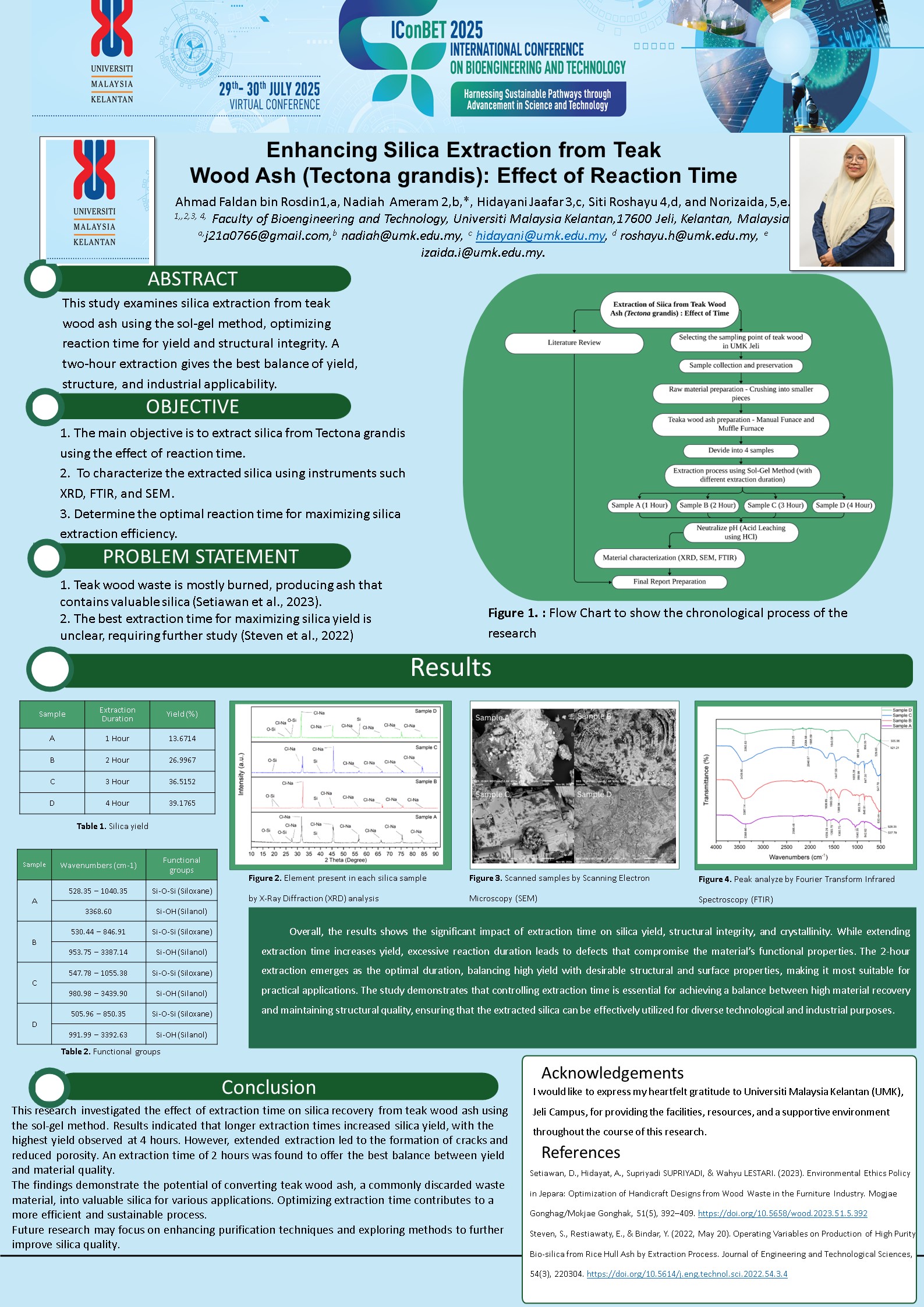
| 1 | Comment from Assoc. Prof. Dr. Muhammad Azwadi Bin Sulaiman, 2025-07-28, 12:21:09 PM | Very good presentation. Good voice too. | Answer from the presenter, 2025-07-29, 2:23:06 PM | Alhamdulillah and Thank You Prof for your comments |
| 2 | Comment from NOOR JANATUN NAIM BINTI JEMALI, 2025-07-29, 9:04:05 AM | Understandable poster. Visual layout could be improved for better balance. AI voice over somehow read all information written in the poster. maybe author can focus on important & highlighted parts. | Answer from the presenter, 2025-07-29, 2:23:43 PM | Thank you very much for your thoughtful feedback. I truly appreciate your suggestions. I will definitely look into improving the visual balance of the poster and ensuring that the AI voice-over emphasizes only the key points to enhance clarity and engagement. Your input is very helpful for future improvements! |
| 3 | Comment from Mr. Abu hurairah, 2025-07-29, 10:49:45 AM | Good poster | Answer from the presenter, 2025-07-29, 2:24:10 PM | Thank you so much! I really appreciate your kind words and support. ? |
| 4 | Question from Mr. Imranhaziq, 2025-07-29, 12:13:07 PM | Is that any specific method for extraction silica for teak wood? | Answer from the presenter, 2025-07-29, 2:26:52 PM | Yes, silica can be extracted from teak wood ash using the sol-gel method, This method allows the controlled production of amorphous or mesoporous silica, depending on parameters like pH, temperature, and acid concentration. Teak wood ash is a good biomass source due to its relatively high silica content compared to other hardwoods. |
| 5 | Question from Mrs. Izzatinasir, 2025-07-29, 1:39:09 PM | Given that teak is a costly and endangered species, what justifies its use in your research? | Answer from the presenter, 2025-07-29, 2:27:55 PM | Thank you for the important question. While teak is indeed a valuable and often protected species, the focus of this research is not on harvesting living teak trees, but rather on utilizing teak wood waste or post-consumer ash. The teak used is not sourced through deforestation. Only existing waste material is used, ensuring no impact on forest conservation efforts |